


Further evidence of the breakdown of collective responsibility in the Government. The Home Secretary has called for Immigration Minister Mike Tapp to be sacked. But (thus far) the Prime Minister has not agreed. Mahmood is restricting Tapp’s access to government documents. So is he a Minister in name only? In a Government in name only? He doesn’t seem to be bothered, judging by his tweet this morning:


Jake Richards, a junior justice minister, told Times Radio that the Home Office should ‘take a deep breath’.
Several contributors to CapX this week have offered a gloomy prognosis for the prospects our country faces under a Burnham premiership. But a report in The Times suggests he is being given some sensible advice. Lord O’Neill of Gatley says: ‘I am very opposed to the general rule of wealth taxes. I think they are very easy to be gamed and avoided, so I don’t think they are likely to raise a lot of revenue.’ While Andy Haldane, the former chief economist at the Bank of England, who is also advising Burnham, has made a call to simplify UK taxes, saying they were ‘stupendously complex’ and ‘riddled with inconsistencies.’
Below you’ll find all the latest pieces from CapX, plus what we’re reading from around the web.
CapX
Today’s Takes
Fresh thinking from CapX

State-run trains are already failing.
Tony Lodge
‘The highest overall satisfaction rating is where state-run LNER competes with three unsubsidised private open access intercity operators’
Though these are early days for state-run trains, the signs are not good. Labour’s latest plan to nationalise train services contains no passenger growth target or cost control safeguards. The statistics offer the government and GBR a clear solution which cannot be ignored. If GBR is to grow its customers, reduce its reliance on taxpayer subsidy, deliver better services and value for money fares – then its services should be made to compete with subsidy-free open access, especially across the long-distance intercity network. Read More
Burnham’s fantasy about ‘trickle down economics’
Mitchell Palmer
‘The economic argument for lower marginal tax rates on higher incomes is not that giving rich people more money will make them generously sprinkle it over the poor’
Burnham’s phrase is useful politics, because it turns an argument about trade-offs into a story of morality. On one side are the greedy rich (the bad guys, usually on the bluer end of the colour chart), and on the other are the decent many. But the real question is not whether the rich are getting more than their ‘fair share’ but whether Britain can afford to keep punishing work, saving, investment, and enterprise, and then act surprised when there is less of them. Read More
True Manchesterism was everything Burnham opposes.
Ted Newson
‘Classical liberals have historically viewed Manchester as a testament to the roots of free organisation, free trade, and free speech’
The original Manchesterism came about as a response to repressive state practice that brought about import quotas, price ceilings and other state interventions. State mercantilism benefited rich landowners by keeping domestic grain prices artificially high, but penalised consumers, who endured a higher cost of living and constant shortages. Tariffs imposed by the Corn Laws made life more expensive to protect domestic producers from international competition Read More
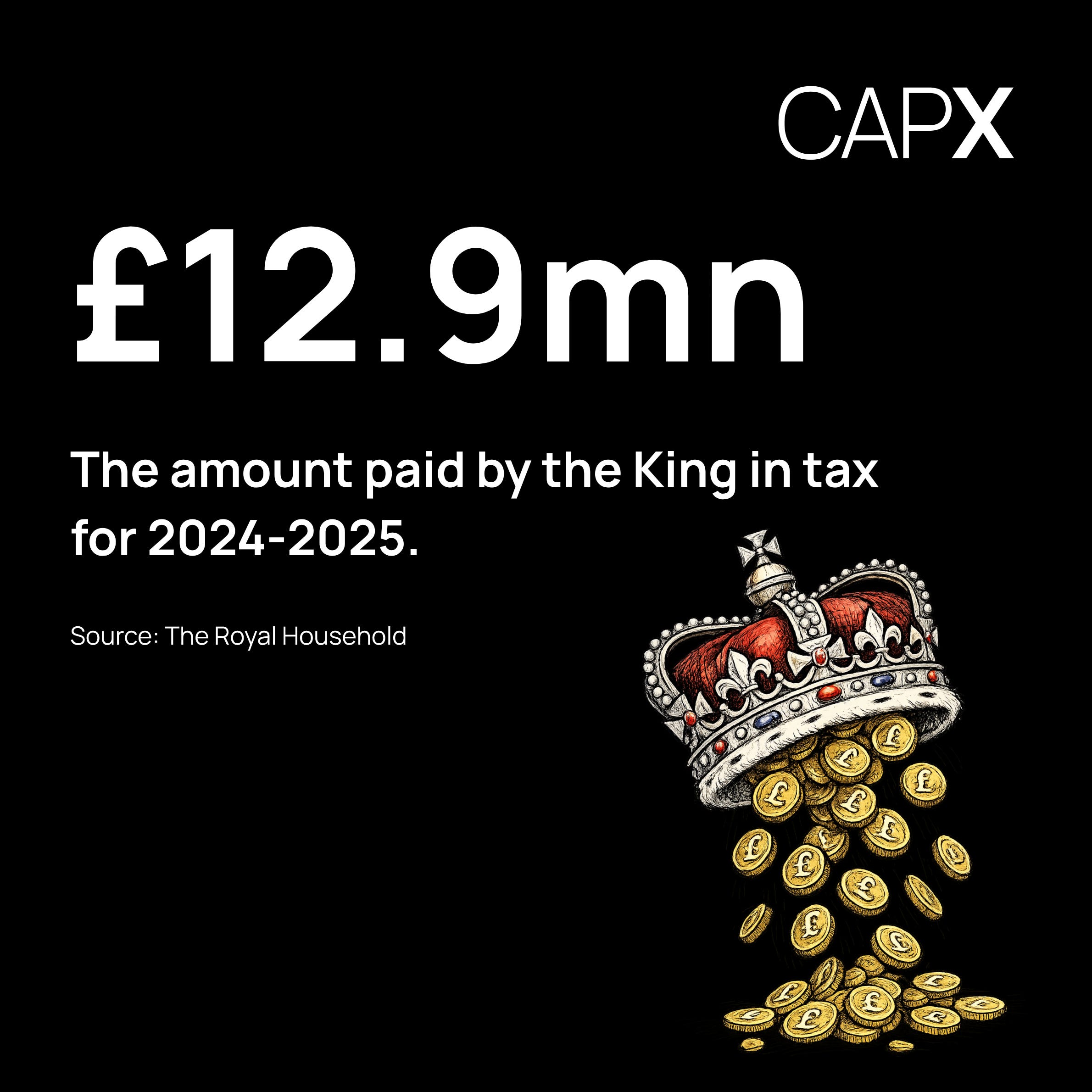
Stat of the day
The CapX Reading List
The best of the web today
Are you ready for Burnham’s first Budget?
Michael Simmons, The Spectator
‘The reality awaiting him and his new Chancellor is that we live in a poor country that believes it’s still rich, and that we’re governed by a large state we claim is too small’
Tot up the causes he has championed or spending requests he’s nodded at and you reach quite a bill: billions for council house building, billions more for social care, and a few hundred billion for renationalisations too. Burnham is writing cheques Britain simply can’t cash. He has learnt nothing from the fatal mistakes Starmer and his team made when they entered office just two years ago. Read More
The cost of red tape is measured in jobs
Sean Houlston, Conservative Home
‘The problem is not necessarily any individual measure. The problem is the cumulative effect’
The Government’s own impact assessment estimates that the Employment Rights Act could impose around £5 billion of additional costs on businesses each year. For large corporations with extensive legal and human resources departments, such costs may be manageable. For small and medium-sized businesses, the firms that account for the overwhelming majority of private sector employment, the calculation is very different. Read More
A decentralised NHS is one thing Burnham and I might agree on
Jeremy Hunt

The Capitalist: The battle for Brexit isn’t over
And if you want more...
– The NHS won’t stop killing people, and nobody seems to care (David Frost, Daily Telegraph)
– UN: The poverty of its degrowth agenda (Vance Ginn, Daily Economy)
– Brexit: My journey from Remain to Leave (Nigel Biggar, City AM)
Can we make CapX better?
Or reply to this email to let us know your thoughts.
We'll be back on Monday.